Lesson information
What to expect in a lesson
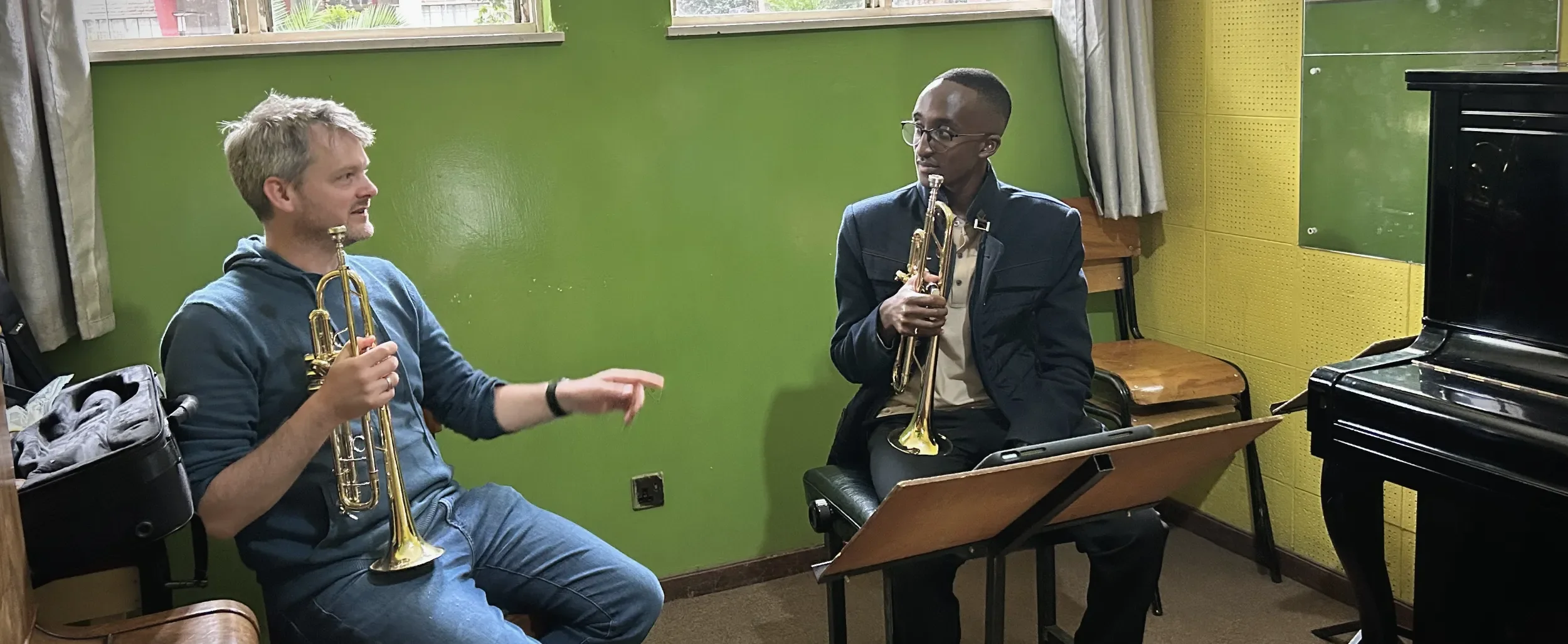
Each person is different, so my teaching methods are adapted according to the student’s goals, age, and experience. For young children, lessons are kept very simple and focused on having fun; for adults there can be more in depth discussion of musical and technical concepts.
My objective is to help each student feel the joy of music-making, gain confidence, and ultimately achieve independence in their musicianship. Two key goals are to enable them to have fun playing with others and to give them them the artistic tools that will enable music to be a gratifying method of self-expression.
I am happy to help students prepare for grade exams. Many of my students have achieved distinctions in their exams and my students always pass. For those who want to take their playing very seriously, I can provide the right challenges and structure work in ways that will be fun and rewarding, helping unlock potential.
Playing an instrument is a gateway to all kinds of musical discovery. Rather than sticking to just one style, we explore a variety of ideas right from the start to match each student’s interests, including traditional reading and music theory, playing by ear, and improvisation.
In the first few months of learning, lessons focus on:
Having fun with the instrument
Getting used to making a sound
Learning to read the first few notes
As your skills progress, the best thing you can do is to join a group that rehearses regularly and gives performances, this is the best method for helping to accelerate progress. It is also extremely rewarding when your friends and family come to hear the results of your work on performance day.
Here are some groups available to join in Nairobi.
For students who want to take exams, a broad expectation would be to take one per year, with some students progressing faster, and some slower. Most students, with consistent practice, can take the first grade within the first year.
Once a student has got the basics, lessons usually have four key components:
Warm up - in which we play some simple exercises to work on making a great sound
Scales - the building blocks of all music and a great way to improve skill and understanding
Technical work - where we explore and practice important elements of playing technique
Music - the main part of the lesson, learning pieces or practicing improvisation
In a one-hour lesson, we’d usually expect to spend 20-30 minutes on parts 1-3 and the remainder of the time on part 4.
For more advanced, experienced players, goal-setting is very important. We will work together to create a practice routine that will help develop the key areas of technique: breathing, articulation, and fingering, and which will improve strength, stamina, and range. Alongside this we will work on other important skills like sight reading and transposition, and look at studies and pieces from the solo trumpet repertoire.
Practice Requirements
The most important thing about practice is consistency. Beginners don’t need to practice a lot—10-15 minutes per day results in a lot of quick progress. Daily practice is important so that the muscles used strengthen and the ideas discussed in lessons stay in mind. I recommend the following practice per day for best results:
Grades one to four - 15-30 minutes
Grades five and six- 30-45 minutes
Grades seven and eight - 45-60 minutes
Online/In Person
I have teaching bases in Karen and Lavington, and am sometimes able to travel to students’ homes. Please get in touch and we can discuss the best location for you.
Online lessons are also possible using Zoom. If you are interested in this please get in touch and I can give you some more information.
Getting Started
To get started the only requirement is an instrument. Trumpets are available in Nairobi from Ksh 35,000 and I am happy to guide you on getting the right one.
Here is some information about places in Nairobi where you can purchase equipment and resources.